


When mapping out your financial future, few estate planning documents create as much uncertainty as those naming a power of attorney (POA) and an executor. Both roles require trust, authority, and accountability—but they apply at very different points in your life. Knowing how a power of attorney and an executor function, and how those functions fit together, can strengthen your estate plan, reduce strain on loved ones, and help ensure your wishes are carried out as intended.
For individuals approaching or living in retirement, understanding how to choose a power of attorney and an executor—and what responsibilities each role carries—is especially important. These appointments influence how your financial and personal matters are handled while you’re alive and how your estate is managed after your death. This article outlines the key differences, explains how the roles support one another, and offers guidance on selecting the right people for each position.
If you have questions about your estate plan or are unsure who should serve in these roles, connect with your financial professional. They can help coordinate your financial strategy and estate planning documents so everything works together smoothly.
Key Takeaways
Before we go deeper, here are the key points and distinctions to understand about a power of attorney and an executor.
- A power of attorney can act while you’re alive (especially if you’re incapacitated); an executor acts after death to carry out your will.
- The roles are not interchangeable: a POA’s authority ends at death, and an executor has no authority during your lifetime.
- A POA helps keep financial and personal decisions moving during life; an executor helps ensure your assets are handled and distributed as intended afterward.
- Choosing the right people matters because both roles carry legal authority and fiduciary responsibility.
- These appointments should be reviewed after major life changes (marriage, divorce, relocation, illness, or a death in the family).
With these basics in mind, the rest of this guide breaks down how each role works, where responsibilities begin and end, and what to consider when appointing individuals to serve in these important roles.
What’s the Difference Between a Power of Attorney and an Executor?
A power of attorney and an executor serve different purposes in an estate plan, and their authority applies at different times. A power of attorney allows someone you trust to make financial, legal, or healthcare decisions on your behalf while you are alive. An executor is responsible for carrying out the instructions in your will after your death.
Although both roles involve decision-making and fiduciary responsibility, they are not interchangeable. A power of attorney cannot act after death, and an executor has no authority while you are living.
Why Does This Distinction Matter in Estate Planning?
Estate planning isn’t only about transferring assets. It also plays a critical role in protecting your independence and financial well-being while you’re still living, especially if illness, injury, or cognitive decline ever makes it hard to manage day-to-day decisions. The Consumer Financial Protection Bureau notes that a power of attorney can allow a trusted person to step in and manage finances on your behalf, and it offers guidance designed to help prevent financial exploitation. At the same time, naming an executor ensures your wishes are followed and your estate is properly administered after you pass away.
When these roles are clearly defined and properly coordinated, your estate plan is more complete, easier for loved ones to navigate, and less likely to lead to conflict or legal complications.
The Executor’s Role After Death: Responsibilities and Boundaries
An executor—sometimes referred to as a personal representative—is the individual named in your will to manage your estate after your death. This role carries legal, administrative, and fiduciary responsibilities, requiring the executor to act in the best interests of the estate and its beneficiaries.
Core Responsibilities of an Executor
After your death, the executor often initiates the probate process and receives authority to act on behalf of the estate. Their responsibilities typically include:
- Gathering and protecting estate assets
- Paying outstanding bills, taxes, and valid debts
- Distributing remaining assets according to your will
- Maintaining detailed records and reporting to beneficiaries and the court
Because executors are held to a high standard of accountability, organization and transparency are essential to keeping the estate administration process on track.
What an Executor Is Not Authorized to Do
An executor named in your will has no legal authority while you are alive. They cannot access accounts, manage property, or make decisions until they are formally authorized by the court after your death. Their authority ends once the estate has been fully administered and approved.
A financial professional can help align your account ownership, beneficiary designations, and tax planning so your executor’s role is clear and efficient. If you’d like help reviewing these details, contact the office for personalized guidance.
The Power of Attorney’s Role While You’re Alive
A power of attorney is a legal document that allows another person—often called your agent or attorney-in-fact—to act on your behalf while you are living. Depending on how it’s drafted, this authority may apply to financial decisions, healthcare matters, or both.
When and How a Power of Attorney Takes Effect
A power of attorney may become effective immediately upon appointment or only if you’re declared incapacitated. Regardless of when it begins, a POA automatically ends at death, at which point authority transfers to your executor.
The National Institute on Aging explains that a durable power of attorney remains valid even if you become incapacitated, helping ensure that bills are paid, investments are managed, and healthcare decisions align with your wishes.
Common Types of Power of Attorney
A power of attorney can have different functions depending on your needs and instructions. Common types include:
- Financial Power of Attorney: Manages finances, investments, taxes, and property transactions
- Healthcare Power of Attorney: Makes medical and care decisions if you cannot communicate them
- Limited Power of Attorney: Applies to a specific task or limited timeframe
Safeguards to Consider When Naming an Agent
Because a power of attorney grants significant authority, it’s essential to choose someone dependable, organized, and willing to communicate clearly. Agents have a fiduciary obligation to act in your best interest, avoid conflicts, and maintain accurate records.
If you’re uncertain how to structure your power of attorney or who you should appoint, your financial professional can help integrate this decision into a cohesive estate plan.
Power of Attorney vs Executor: A Side-by-Side Comparison
The chart below highlights how a power of attorney and an executor differ in timing, authority, and oversight:
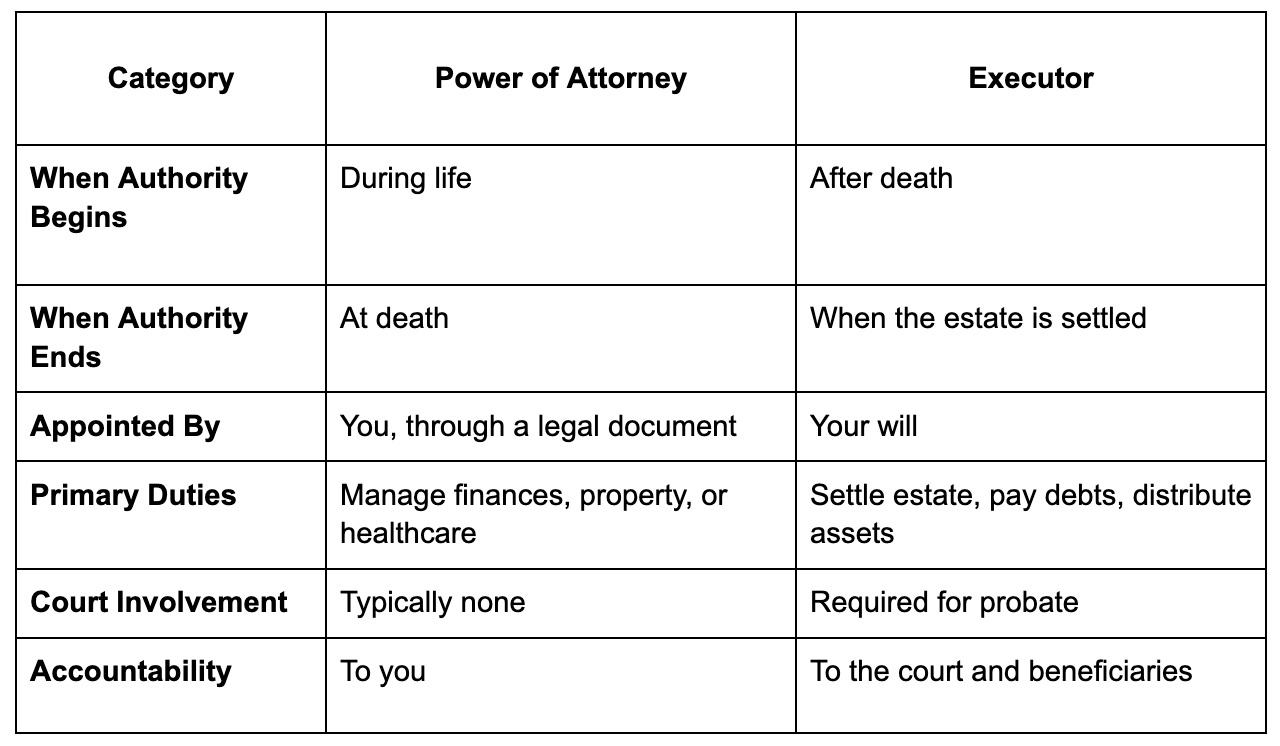
Together, these roles provide continuity, helping ensure your affairs are managed responsibly both during your life and after.
How These Roles Create Continuity Across Life and Legacy
A well-designed estate plan ensures there’s no moment when your affairs are left without direction. While the power of attorney and executor serve at different times, together they provide continuity—so responsibilities don’t fall into limbo during periods of illness, incapacity, or transition.
This continuity reduces stress for loved ones, limits confusion during emotionally difficult moments, and helps ensure your wishes are followed without interruption. When the people you’ve chosen understand their roles—and how those roles connect—the handoff from lifetime planning to estate administration is far more seamless.
If you’re unsure whether your current estate planning and legal documents clearly support that continuity, it may be time to review and update them.
How Should You Choose Who to Appoint to These Roles?
Selecting a power of attorney and an executor is among the most important decisions you’ll make in your estate plan. These roles carry real responsibility, require trust, and often involve difficult moments. Taking the time to choose thoughtfully helps ensure your wishes are respected and your loved ones are supported when it matters most.
Traits to Look For
The individuals you choose should be capable of handling responsibility, communicating clearly, and acting in your best interest, even in stressful situations. Look for desirable traits, such as:
- Trustworthiness and integrity
- Strong organizational and recordkeeping skills
- Clear communication with family members and professionals
- Willingness to follow instructions carefully
Can the Same Person Be Both Your POA and Executor?
In some situations, naming the same individual as both power of attorney and executor can simplify matters. However, if family dynamics are complex or your finances are substantial, separating responsibilities or appointing a professional fiduciary may reduce stress and potential conflict.
When Should You Revisit Your POA and Executor Appointments?
Review these appointments after major life events such as marriage, illness, relocation, or the loss of a loved one. As circumstances change, your estate plan should evolve as well.
If it’s been several years since your last review, contact the office to confirm your selections still reflect your goals and circumstances.
What Mistakes Should You Avoid With POA and Executor Roles?
Even thoughtful planners can misunderstand how these roles work. Common misconceptions and mistakes include:
- Assuming a power of attorney remains valid after death
- Believing an executor can act while you are still alive
- Failing to update documents after major life changes
- Not discussing these appointments with the people involved
The IRS also notes that executors may be responsible for filing final tax returns and handling estate-related tax matters, while powers of attorney typically manage tax issues during life.
A financial professional can help ensure these responsibilities are clearly defined and properly coordinated.
How Can Your Financial Professional Help Bring the Plan Together?
Financial professionals play an important role in connecting estate documents with your broader financial strategy. Reviewing how your power of attorney and executor align with account ownership, beneficiary designations, and tax planning can reveal gaps that need attention. They also work alongside estate attorneys to help ensure everything reflects your intentions.
For retirees, this coordination can simplify estate administration and reduce delays or confusion for family members.
If you’d like to review your plan and confirm these roles are properly integrated, schedule a consultation with your financial professional.
Common Questions About Power of Attorney and Executors
What’s the main difference between a power of attorney and an executor?
A power of attorney acts during your lifetime, while an executor’s authority begins after your death.
Can the same person serve as both your POA and executor?
Yes, although separating the roles can help balance responsibilities and reduce potential conflict and risk.
Does a power of attorney remain in effect after death?
No. A power of attorney ends at death, and the executor’s authority begins.
Who should I appoint as my power of attorney and executor?
Choose individuals you trust who are organized, reliable, and comfortable handling sensitive matters.
How often should these designations be reviewed?
Every few years, or after major life events such as marriage, illness, or relocation.
What happens if I don’t name either role?
A court or state law may determine who acts on your behalf, which can delay or complicate matters.
Are there tax responsibilities tied to these roles?
Yes. Powers of attorney may manage taxes during life; executors handle tax matters after death.
Why is it important to name both roles?
Together, they ensure someone can act on your behalf in every stage, during life and after.
Can a court remove a power of attorney or executor?
Yes. Courts can revoke or replace individuals who violate fiduciary duties or misuse authority.
Can professionals serve instead of family members?
Yes. Attorneys, accountants, and trust companies are often appointed to reduce family conflict and provide professional oversight.
Next Steps: Keep Your Estate Plan Coordinated and Current
A well-designed estate plan considers both how your affairs are managed during your lifetime and how your wishes are carried out after you’re gone. Your power of attorney and executor work together to ensure that transition happens smoothly, under these key distinctions:
- Your power of attorney oversees decisions during your lifetime
- Your executor administers your estate after your death
Both roles deserve careful consideration, open communication, and periodic review. Keeping them current helps protect your goals and support the people you care about.
A clear, well-coordinated estate plan helps protect both your intentions and the people you care about. If you’re ready to review your power of attorney and executor and ensure they align with your current wishes and goals, schedule an estate plan check-up with your financial professional today.
Cetera Wealth Services, LLC exclusively provides investment products and services through its representatives. Although Cetera does not provide tax or legal advice, or supervise tax, accounting or legal services, Cetera representatives may offer these services through their independent outside business. This information is not intended as tax or legal advice.